Three-Phase Electric Motors - Everything You Need to Know and How to Choose

Three-phase electric motors are the primary driving force in industry, powering a wide range of production processes. Their selection is essential for ensuring efficiency. In the world of electric motors, three-phase models dominate, characterized by stability and longevity. They meet the highest industry standards and expectations.

When selecting a three-phase electric motor, frequency, power range, efficiency class, and operational characteristics must be considered. Precise selection guarantees an optimized energy consumption balance. Need quick consultation when choosing an electric motor? Contact us now

Three-Phase Electric Motors: Industrial Applications

Three-phase electric motors are an integral part of many industrial sectors, ranging from mass production conveyor systems to complex chemical processing systems. Their efficiency and ability to sustain high loads make them ideal solutions for heavy industry, where long-term and stable power supply is required. Furthermore, three-phase motors are adaptable and can be modified for special applications, such as explosive environments or higher operating temperatures, which further expands their application spectrum across various industrial applications.

Suitability Assessment Across Various Industries

Three-phase electric motors are adaptable across various industrial sectors due to their universal design. Three-phase motors ensure high efficiency and lower energy consumption, reducing operational costs. It is important to know that the unique requirements of each sector dictate motor selection, taking into account their power, frequency, and design parameters. Three-phase motors are a solution that allows optimization of production processes, maximizing the advantages, practicality, and longevity offered by the motor.

Efficiency and Economy Comparison

Three-phase motors are evaluated according to IE efficiency classes, ranging from IE1 to IE5. The higher the class, the lower the energy consumption. As a rule, higher efficiency class motors are more expensive at purchase, but their operation is more economical. Over time, energy consumption savings compensate for the initial purchase difference. Throughout the entire operational period, the motor efficiency class should be selected based on usage intensity. There are cases where long-term energy savings exceed the initial investment.

Properly selected three-phase motors to achieve optimal efficiency become not only a technical but also a financial investment. When calculating total benefit, not only energy consumption is considered, but also failure prevention. The combination of efficiency and economy is an essential aspect for proper motor selection. The key is the right balance between initial acquisition cost and future economic advantages.

Technical Specifications and Standards

The technical specifications of three-phase electric motors are extremely important in the selection process, as they directly affect motor operating efficiency and potential applicability in specific industrial areas. These motors are manufactured according to international standards such as IEC, GOST, NEMA, which establish general motor characteristics and mounting dimensions, ensuring their interchangeability and compatibility in various equipment systems. Supply voltage, which can range from 220 V to 690 V for low-voltage motors and from 2.3 kV to 10 kV for medium-voltage motors, frequency, set at 50/60 Hz, and power range, covering a spectrum from 0.09 kW to 500 kW, are essential specifications related to energy utilization efficiency and power. Depending on operating conditions, motor housings are manufactured from aluminum or cast iron and adapted to different environmental impacts, including explosion hazards, according to ATEX classification.

Power and Efficiency Class Significance

The power of three-phase motors depends on their industrial application: from small tasks to heavy machinery. The power range is extremely broad – from 0.09 kW to 500 kW.

  • IE1 – standard efficiency class motors, used in simple and less demanding systems.
  • IE2 – higher efficiency class motors, most often selected for energy savings.
  • IE3 – highly efficient motors, reducing energy consumption and CO2 emissions.
  • IE4 – highest efficiency class motors, designed for the most energy-saving industrial processes.
  • IE5 – SynRM motors can reduce energy losses by 40%.

The best efficiency class motors can reduce operational costs and environmental impact over time.

Taking into account power and efficiency class, each three-phase motor can be adapted to tasks of specific complexity and load.

Importance of IEC, GOST, NEMA Standards

Standardization of three-phase electric motors is vitally important worldwide. Manufacturers from various countries orient themselves toward international standards, seeking to ensure compatibility, safety, and quality. IEC, GOST, and NEMA standards serve these goals, forming a common understanding and expectations in the industry.

IEC (International Electrotechnical Commission) establishes international electrotechnical standard directives that regulate technical motor characteristics, such as mounting dimensions, operating frequency, and power range. GOST (gosudarstvennye standarty) is the Russian standardization system, focusing on requirements for standards widely used in the former Soviet Union. Meanwhile, NEMA (National Electrical Manufacturers Association) reflects U.S. market characteristics, providing specifications for electric motors used in North America. Compliance with the mentioned standards is not only a market requirement but also a guarantee that motors will be reliable and efficient in different industrial sectors. Adherence to standards allows selection of suitable motors for various equipment, seamless integration into continuous production processes, and ensures rapid technical support.

Qualification and compliance verification with standards must be an essential stage of motor selection. Motors complying with IEC, NEMA, and GOST standards are characterized by high quality, precise geometric and electromechanical characteristics, which determine long-term and flawless operation. This is why products from selected manufacturers worldwide are valued for their ability to operate efficiently under different operating conditions, and partnership with reliable suppliers ensures a high level of operational reliability and safety.

Motor Selection Criteria

When selecting a motor, it is necessary to consider its power range and compliance with efficiency class. This allows assessment of motor suitability for intended operating conditions and expected performance. Depending on motor power and efficiency, its energy consumption and operating efficiency change, which directly affects operational costs.

An important aspect is motor supply voltage and frequency, especially considering whether a low or medium voltage electrical network will be used. Motor housing material should also be considered, as this will determine motor resistance to mechanical impacts and environmental factors, such as chemical corrosion or high temperature.

No less important is paying attention to motor configuration. Various configurations are possible, adapted to specific industrial needs, for example, in the case of motors used in explosive environments or for lifting mechanisms.

Operating Conditions Analysis

Selection of three-phase electric motors is a responsible task, during which environmental factors must be carefully assessed.

  • Ambient temperature and humidity level;
  • Intensity of mechanical vibrations and shocks;
  • Environmental cleanliness and chemically aggressive substances;
  • Explosion hazard or special ATEX requirements;
  • Motor duty cycle and forced cooling requirements;
  • Electrical network stability and supply voltage fluctuations.

A concise summary of these criteria allows selection of the most optimal motor type and class compliance. Precise determination of motor technical parameters ensures long-term and flawless operation in complex industrial conditions.

Environmental Impact and ATEX Classification

Environmental conditions are particularly important when selecting an electric motor that will be operated in a potentially explosive environment. This is determined by ATEX regulation requirements applicable to motors used in explosive atmosphere zones. ATEX classification is an essential characteristic of motors intended for use in explosive mixture environments. It reflects motor design resistance to ignition and ability to operate safely in operating conditions where flammable substance concentrations may form. Carefully selecting an ATEX-classified motor ensures safety not only of equipment but also of people working around it. Strict ignition resistance standards are established, and any deviation from them can be critical.

Motors meeting explosion safety classification requirements are marked with special symbols that inform about the possibility of using them in certain zones and with specific substances. This allows users to more easily recognize and select the component that will suit a specific industrial sector. Ensuring compliance with ATEX standards can reduce explosion risk and increase reliability of the entire production process, while guaranteeing worker safety and equipment longevity.

Supplied Motor Types:

Our range includes motor types that are adapted to specific industrial needs. Competing at the forefront of technological advancement, we offer asynchronous three-phase electric motors, which are valued for their versatility and relatively simple construction. From specialized motors with brakes, used in processes requiring rapid braking, to high-efficiency motors, such as permanent magnet or synchronous reluctance motors, which are characterized by higher efficiency and lower energy consumption.

Low-center motors are an optimal choice for equipment with limited mounting height, while servo motors provide impeccable positioning accuracy. Inevitably, we supply motors meeting ATEX requirements, designed for operation in explosive environments, as well as motors for lifting mechanisms and even special-design motors meeting individual customer expectations.

Three-phase asynchronous electric motors – the most widely used motors in industry, compliant with global manufacturing standards (IEC, NEMA, GOST).

Asynchronous three-phase electric motors are the primary industrial motors because they are characterized by high reliability and longevity. Their construction allows easy adaptation of the motor to the needs of various industrial sectors, and a wide performance and efficiency spectrum ensures their broad application. Whether the efficiency indicators of these motors meet IE1, IE2, IE3, IE4, and IE5 standards determines their energy consumption efficiency. High motor efficiency levels not only reduce operational costs but also meet increasingly stringent international market requirements in the field of environmental protection. Asynchronous motors can be adapted in production to various operating modes, from continuous operation to cyclic on/off switching, taking into account specific production process specifications.

The fact that these motors are compatible with IEC, NEMA, and GOST standards means they can be used and exported in large quantities without obstacles in international markets. Standardization also ensures that motor maintenance and spare parts supply are easier and more reliable, as obtaining necessary parts is easier and more cost-effective. When selecting a motor, housing material must be considered – aluminum or cast iron. This affects motor weight, corrosion resistance, and heat dissipation efficiency. If the motor will be operated in an explosive or highly aggressive environment, it is recommended to choose motors with ATEX certification, which ensures a higher level of safety. All these characteristics determine that asynchronous three-phase electric motors are an extremely flexible and reliable power source option for many industrial sectors.

High-efficiency motors – Permanent magnet motors; Synchronous reluctance motors.

Permanent magnet and synchronous reluctance motors are distinguished by particularly high efficiency and optimal energy consumption balance.

  1. High efficiency: Motors are characterized by a higher efficiency coefficient compared to standard asynchronous motors.
  2. Lower operational costs: Due to high efficiency, electricity consumption and costs are reduced.
  3. Longer service life: High-quality materials and advanced construction ensure reliable motor operation for a long time.
  4. Greater environmental protection: Reduced energy consumption lowers CO2 emissions and helps protect the environment.
  5. Application flexibility: these motors are compatible with various control systems, making them suitable for various industrial needs.

Motors with brakes – used in equipment requiring rapid stopping due to short process cycles or safety requirements;

Three-phase electric motors with integrated brakes are essential in equipment with strict safety standards. They ensure instantaneous braking, which is particularly important in emergency situations when equipment operation must be stopped immediately. Brake function is an inseparable part of safe motor control. System efficiency is ensured by rapid response to control signals.

Motors with brakes are characterized by exceptional kinetic parameter regulation capabilities. They ensure high dynamic characteristics and enable achievement of specific capacities in minimal time. This is particularly important in processes requiring rapid impulse response and precise braking torque setting, for example, in automated assembly lines, stamping presses, or packaging equipment.

Integrated brakes in three-phase motors are irreplaceable where braking accuracy and repeatability are required. To ensure process efficiency and production safety, these motors are designed so that braking is fast and reliable. Precise brake configuration allows selection of optimal braking force level based on specific process or equipment needs, for example, under heavy load or during intensive operation.

Low-center motors – motors with narrower frame construction that, due to reduced shaft height from the base, are typically used in cutting, drilling, and milling machines;

Low-center motors are highly valued for their lower height and compact design. They allow more efficient use of space, especially in terms of height. At the same time, due to the low-center shaft configuration integrated in the housing, these motors are characterized by good dynamic properties and lower weight.

Reduced shaft height from the base ensures motor versatility. This provides the ability to more easily integrate equipment and machine tools used in various industrial spheres. Specialized tasks performed in cutting, drilling, milling equipment, requirements in terms of height and stable equipment mounting, undoubtedly highlight the applicability of low-center motors. This type of motor ensures flexible mounting capability in hard-to-reach places, while reducing vibration and noise, which is essential for quality machining accuracy.

Due to the specific design principle, low-center motors can be effectively used in various automation, wood, and metal processing industries. More complex technology, compared to standard motors, provides the ability to achieve high performance with relatively small investments in failure prevention and operation of these motors. Without making any compromises on efficiency, they are ideally suited for production processes with the highest requirements.

Servo motors – widely used in high positioning accuracy systems; Motors for operation in explosive environments (ATEX classification);

Motors adapted for operation in explosive environments (according to ATEX classification) meet strict safety standards. Careful selection based on operating conditions guarantees long-term and reliable motor operation in explosive environments.

  • Dynamic rotation angle regulation allows precise motion control.
  • High efficiency level reduces energy consumption.
  • Extended communication protocols provide the ability to synchronize operation with other devices.
  • Low moments of inertia allow rapid response to control signals.
  • Integrated axis control components significantly simplify system configuration.

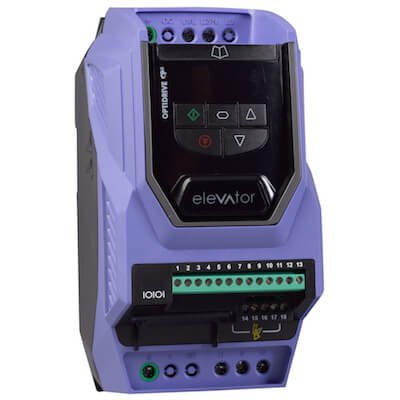
Produkcija
Optidrive P2
Maximum capabilities

0.37-22 kW, 110-480V
Single-phase input and output
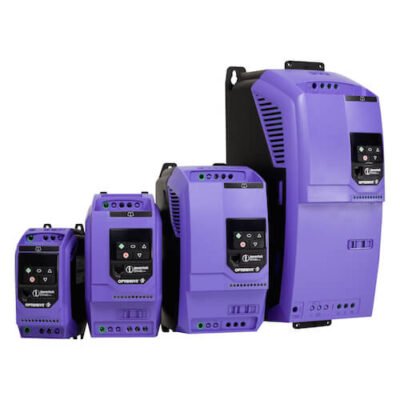
Produkcija
Optidrive E3
Vector Drive for Standard Applications

0.37-22 kW, 110-480V
Single-phase and three-phase input
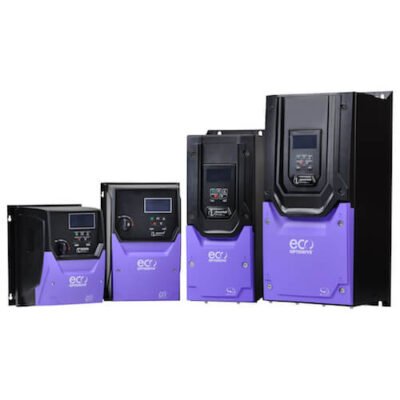
Produkcija
Optidrive Eco
For Water Pumps and Fan Control

0.75 - 250kW, 200-600V
Single-phase and three-phase input

We supply electric motors from 0.09 kW to 500 kW power.

Collaborating with global motor manufacturers, we provide electric motors for industrial spectrum needs. Diverse, from precisely controlled low-power devices to compliant high-power motors, are in our range. All motors comply with international IEC, GOST, and NEMA standards and ensure reliability, longevity, and economy.

Various motor power range configurations are possible. Solutions meeting customer needs are our priority task. Using comprehensive technical knowledge and endless configurations, we can provide a solution for any industrial task, guaranteeing optimal efficiency and low operational costs. For increasing your efficiency – motors up to 500 kW power. Unquestionable reliability and high energy-saving efficiency class (IE1-IE4) guarantee high added value and competitive advantage in your company’s operations.

Have questions or need help selecting the right electric motor? Contact us and we will answer all your questions in just 15 minutes.

Consultation

Professional consultation when choosing a product from a wide market selection.

Reliability

SIMEKSA provides top-quality automation components and professional expertise.

Quality

We offer only tested and reliable products. We collaborate with a number of well-known manufacturers from around the world.

Good Price

We always strive to offer our clients the highest quality equipment at a favorable price. It is important for us to understand your needs and receive feedback.