How to choose the right gearbox for your industry
-
Vitalijus Šimkus
- June 17, 2026
What is a gearbox?
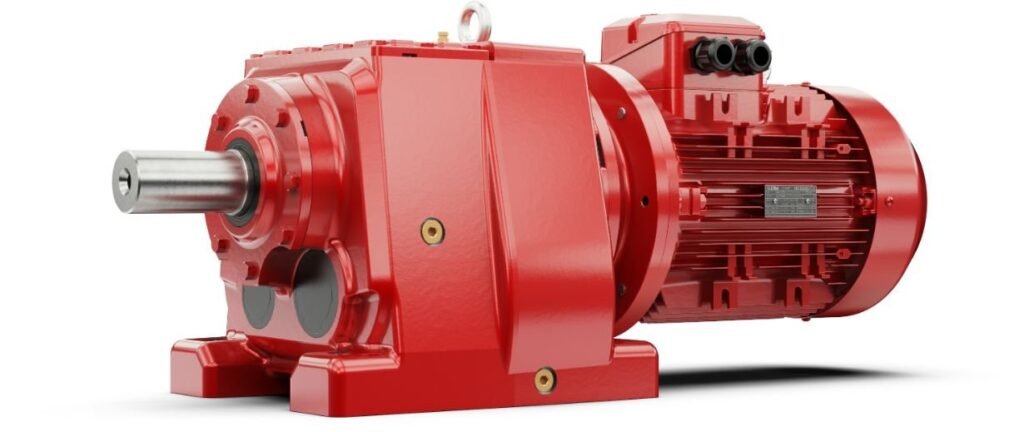
A gearbox is an essential mechanical device that transmits power from one component to another, usually by changing speed or torque. It is an integral part of industrial processes, ensuring their longevity and efficient energy use. A correctly selected gearbox helps to optimize system performance and reduce energy consumption, making its selection extremely important. In this article, we will discuss the main types of gearboxes, materials, maintenance specifics, and common mistakes made when choosing these devices.
Gearbox types and their applications
Helical gearboxes
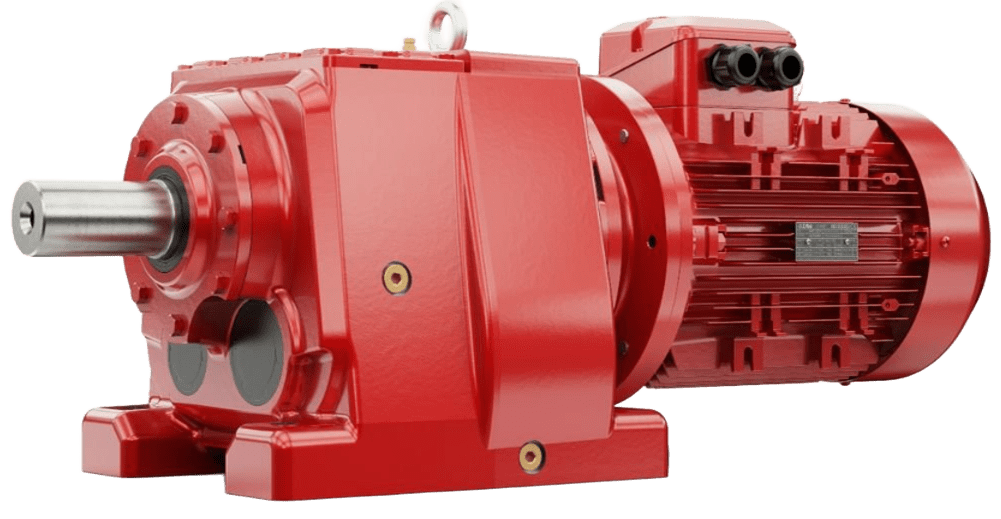
Helical gearboxes feature a simple design and are widely used due to their reliability.
Planetary Gearboxes
Planetary gearboxes are extremely compact and offer high torque transmission efficiency. They are often used in robotics and the automotive industry.
Bevel gearboxes
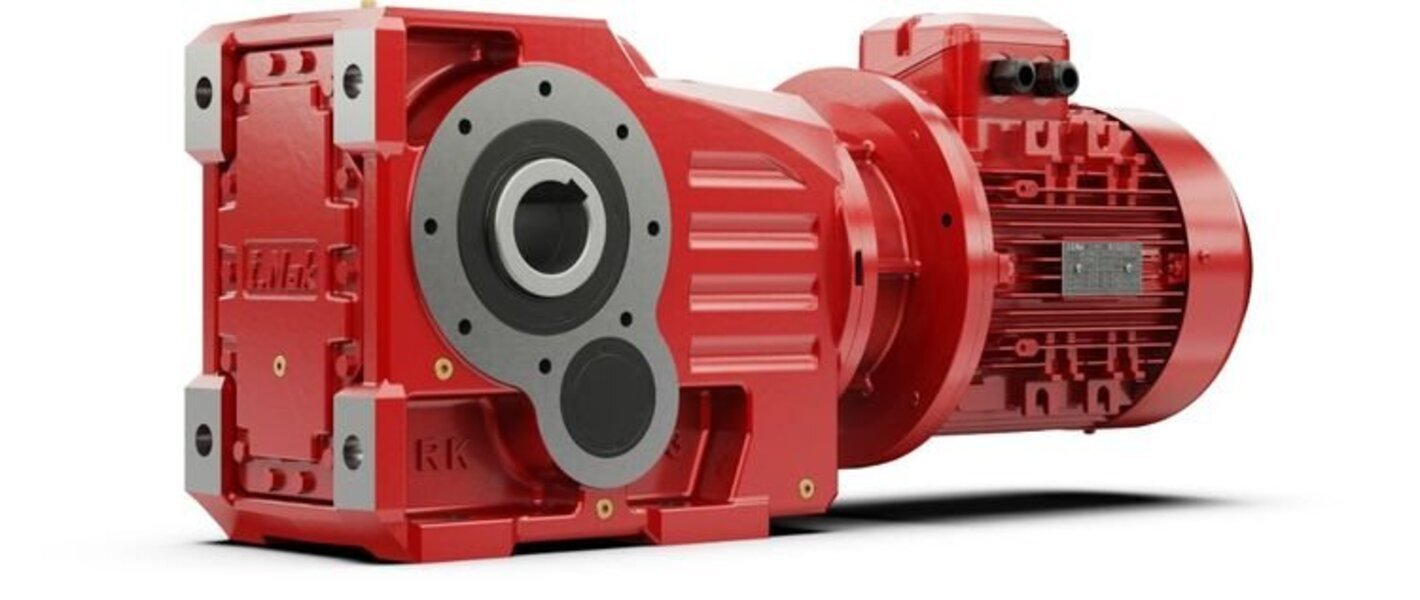
Bevel gearboxes are designed to transmit power at an angle, typically 90 degrees. They are efficient and versatile, but due to their complex tooth geometry, they can be more expensive than helical or worm gearboxes.
Parallel shaft gearboxes
Parallel shaft gearboxes are used to transmit power between shafts that are parallel to each other. They are ideal for situations requiring high torque and low speed. For example, such gearboxes are often used in conveyor systems.
Worm gearboxes
Worm gearboxes are widely used in lower-power applications due to their more economical design. However, they are not as efficient as other gearbox types.
Gear solutions
Gear solutions involve various types of gearboxes, combined into complex systems that allow for the optimization of specific processes. They are applicable in the automotive industry, industrial robots, and production lines. Such solutions provide flexibility in adapting transmission ratios and increasing system efficiency, but require precise calculations and professional design.
Choosing gearbox materials
Steel
Steel is the most popular material due to its strength and wear resistance. It is suitable for heavily loaded systems, is durable but heavier and more expensive than alternatives.
Aluminum
Aluminum is lightweight and corrosion-resistant, making it often used in the transport and aviation industries. An excellent choice for lightweight, low-load projects and equipment operating outdoors. However, it is not as wear-resistant as steel, so it is not suitable for heavy loads.
Plastic
Plastic is used in low-power and light-load systems. It is light and inexpensive, but not suitable for extreme conditions or continuous loads.
Choosing the right manufacturer
When selecting a motor gearbox, the choice of manufacturer is as important as the product specifications themselves. We will share the key characteristics that define a reliable manufacturer, providing examples to illustrate why these factors are crucial for ensuring the success of your industrial operations.
Manufacturer values:
- Reliability and reputation: Choose a manufacturer known for its quality and innovation. For example, a manufacturer with long-term market experience usually provides better warranty service.
- Product range: Ensure that the manufacturer offers a wide selection of gearboxes that meet your industry’s needs.
- Innovation: A manufacturer that prioritizes innovation stays abreast of industry trends, leveraging cutting-edge technologies to deliver solutions that enhance efficiency, durability, and performance.
- Customer service: Exceptional customer service extends beyond product sales – it fosters long-term partnerships and ensures that customers can rely on the manufacturer at every stage of their operations.
- Technical support: It is important for the manufacturer to provide technical support and training to facilitate equipment installation and maintenance.
Best gearbox manufacturers
Globally, manufacturers such as Siemens, Sumitomo Heavy Industries, I-MAK Reduktor, NORD Drivesystems and SEW Eurodrive stand out.
Siemens is one of the world’s leading manufacturers of electric motors and gearboxes, known for its innovative solutions and high-quality products. This company offers a wide range of gearboxes, including helical, worm, planetary, and other types, that meet the highest international standards (IEC, NEMA, GOST). Siemens gearboxes are distinguished by their reliability, energy efficiency, and long-term operation even under the most challenging working conditions.
Sumitomo Heavy Industries is a global leader in gearbox manufacturing, boasting over 130 years of experience. The company specializes in producing high-quality planetary and cycloidal gearboxes that ensure durability and efficiency. Sumitomo products are used in various fields, from automotive manufacturing to heavy industry. Their innovative solutions, such as the “Cyclo Drive”, ensure quiet and stable operation even under heavy loads.
I-MAK Reduktor is a Turkish manufacturer offering a wide range of standard and custom-designed gearboxes. The company produces helical, worm, and planetary gearboxes suitable for various industries, including food production, logistics, and mining. I-MAK Reduktor stands out for its fast delivery and flexibility in creating solutions according to client needs.
NORD Drivesystems is a German manufacturer known for its intelligent drive and gearbox technology. Their products include modular gearbox solutions that are easily adaptable to various applications. NORD is particularly renowned for its energy-saving systems, which contribute to reducing carbon emissions. These gearboxes are widely used in conveyor systems, warehousing equipment, and the food industry.
SEW Eurodrive is one of the leading manufacturers worldwide, specializing in the development of innovative gearboxes and electromechanical solutions. Their products are characterized by high efficiency and durability, and a wide range allows for finding solutions for various industries, including automotive manufacturing, chemical industry, and logistics.
Simeksa offers gearboxes, electric motors, frequency inverters, and a range of spare parts. You can find more about our partners HERE.
Industrial gearbox maintenance tips
- Oil change: Oil change is one of the most important maintenance tasks, as proper lubrication reduces friction and protects gearbox components from wear. For example, a gearbox operating at high temperatures requires special high-temperature lubricants. Insufficient lubrication can lead to excessive friction and rapid wear of the device, while properly selected lubricants will ensure longevity.
- Periodic inspection: Regularly inspecting gearbox components can prevent serious failures. For example, by detecting gear wear in time, only damaged components can be replaced instead of the entire unit. Continuous inspections allow for identifying early signs of failure, such as unusual noises or vibrations.
Cleaning: The gearbox housing and ventilation openings must be clean to ensure proper cooling. For example, dust or grease can clog the breather, leading to increased pressure and the risk of oil leakage through the seals. It is especially important to ensure cleaning in industries where there is often a lot of dirt, such as in woodworking or metal processing lines.
Design requirements
- Space: The size of the gearbox must match the available installation space. If space is limited, for example, in robot constructions, planetary gearboxes are usually chosen due to their compactness.
- Speed: The transmission ratio must be correctly selected according to the required shaft speed. For example, too high a speed can lead to insufficient torque, while too low a speed can result in slow operation.
- Torque requirement: It is necessary to assess what torque the gearbox will need to transmit. For example, an incorrect torque assessment can lead to tooth breakage or other failures in heavily loaded equipment.
- Operating conditions. It is important to evaluate the operating conditions and environment in which the gearbox will operate. In extreme operating conditions, it is necessary to choose a gearbox that meets them. For example, ATEX gearboxes are specifically designed for use in explosive atmospheres, ensuring safe and reliable operation in hazardous conditions.
Common buyer mistakes when choosing a gearbox
- Insufficient torque: Choosing a gearbox that cannot provide sufficient torque can cause the system to malfunction or fail completely. For example, industrial pressing machines require extremely high torque, and too small a gearbox may not be able to ensure stable operation.
- Incorrect transmission ratio: Too low or too high a transmission ratio can lead to energy waste or inefficient operation. For example, a shaft rotating too fast can overheat the equipment, while one rotating too slowly can reduce productivity.
- Negligent assessment of environmental conditions: Disregarding the environment in which the gearbox will operate can lead to problems such as corrosion or overheating. For example, in humid conditions, if corrosion-resistant materials are not used, the gearbox will quickly wear out.
- Incorrect size selection: Sometimes buyers do not consider the available installation space and choose a gearbox that is too large or too small. For example, a gearbox that is too large may be physically impossible to install in the system, while one that is too small may not withstand the loads.
- Insufficient attention to maintenance requirements: Some buyers choose gearboxes whose maintenance needs do not match their capabilities. For example, gearboxes requiring frequent oil changes may be inconvenient to use in companies lacking maintenance resources.
Conclusions
A correctly chosen gearbox ensures efficient and reliable operation of your industrial processes. It is important to carefully evaluate all design requirements, materials, manufacturer, and maintenance aspects. Avoiding common mistakes can prevent unforeseen costs and production downtime.
To choose the most suitable gearbox and avoid mistakes, contact our team – we will provide professional consultation and help you make the best decision!
Frequently Asked Questions (FAQ)
A gearbox is a mechanical device designed to change the rotational speed of an electric motor and increase its torque. It transmits energy between the motor and the working machine, adapting it to a specific load. This ensures precise, stable, and efficient operation of the device.
The operating principle of a gearbox is based on gear transmission – the motor shaft speed is reduced, and the torque is proportionally increased. This process allows for optimal utilization of motor power and reduces mechanical loads. Operating efficiency depends on the transmission ratio, gear type, and construction quality.
The most commonly used types are helical, bevel, worm, planetary, and helical-bevel gearboxes. Each type has a different transmission ratio, construction, and efficiency. The choice of the appropriate type depends on the application, space constraints, and the nature of the load.
Gearboxes are widely used in conveyor belts, lifting equipment, mixers, pumps, packaging lines, and robotics systems. They are essential wherever precise speed and force control are required. Each industry requires a specific solution, so it is important to properly evaluate the working conditions.
A gearbox is a type of gear drive specifically designed for speed reduction. Gear drives can be both reducers and multipliers, depending on the direction of the transmission ratio. A gearbox always reduces speed but increases force – this is its primary purpose.
It is important to determine the nature of the load – whether it is constant or variable, and whether start-stop cycles are frequent. High impact loads require a more robust design, e.g., planetary gearboxes. Meanwhile, continuous loads are suitable for more efficient helical or worm variants.
The transmission ratio indicates how many times the motor speed is reduced. The higher the ratio, the lower the output shaft speed and the higher the torque. A correctly selected ratio ensures optimal energy utilization and protects the equipment from overloads.
Proper lubrication reduces friction, ensures quiet operation, and extends service life. Some gearboxes have oil baths, others have a centralized lubrication system. Incorrect or insufficient lubrication is one of the most common causes of failure.
Regular maintenance is the primary condition for longevity. It is necessary to periodically check the oil level, seals, and operating temperature. Timely detection of changes in vibration or noise can prevent costly repairs.
Modern gearboxes with optimized gear profiles reduce energy losses and heat generation. This allows for savings in electricity consumption and reduces equipment load. Additionally, energy-efficient models often feature quieter operation and lower maintenance costs.
It is necessary to evaluate the working environment (temperature, humidity, dust), load type, duty cycles, and mounting position. For example, the food industry requires hygienic, corrosion-resistant models, while heavy industry requires robust gearboxes capable of transmitting high torque. The correct choice ensures not only efficiency but also a long-term return on investment.