
How to Choose and Purchase a Variable Frequency Drive, Electric Motor, or Gearbox? A Comprehensive Buying Guide
-
Vitalijus Šimkus
- May 20, 2026
Abstract
In this article, we will discuss how to correctly choose and purchase a variable frequency drive, electric motor, or gearbox – three main components that directly determine the operational efficiency and reliability of industrial equipment. We will review the steps of the purchasing process, starting from identifying needs and analyzing technical specifications, up to final decisions regarding price, delivery, and warranty conditions. We will delve into which parameters must be evaluated for each component separately, how the manufacturer and configuration influence the price, and what is important to know about the operating environments of the equipment. The article is intended for buyers looking for a single device, as well as for those planning to upgrade an entire drive system.
Introduction
Variable frequency drives, electric motors, and gearboxes are integral components in many industrial processes. They are crucial not only for motion control but also for the overall performance, longevity, and energy efficiency of equipment.
Properly selected equipment can help avoid costly failures and increase the reliability and efficiency of the entire system.
Stages of the Purchasing Process
Need Identification
The first step is to understand whether the equipment is needed for a new project or for upgrading an existing system. Are you looking for a single component or an entire drive assembly?
For example, if only the variable frequency drive has failed, it can often be replaced alone. However, if the equipment is outdated or inefficient, it would be rational to replace the entire drive assembly. Replacing the entire system ensures compatibility, energy savings, and a longer service life, while a single component might be a more economical solution in the short term.
Technical Specifications Analysis
It is necessary to evaluate: load type, nominal power, voltage, speed, mounting type, and protection class. This helps to immediately filter out models that do not meet the requirements.
If the motor is intended for a pump, it is important to know whether the load is constant or variable. If the system is mounted high, it is worth choosing lighter equipment. Nominal voltage (e.g., 400 V), speed (e.g., 1500 rpm), and protection class (e.g., IP55) are the main initial data.
Environmental Analysis
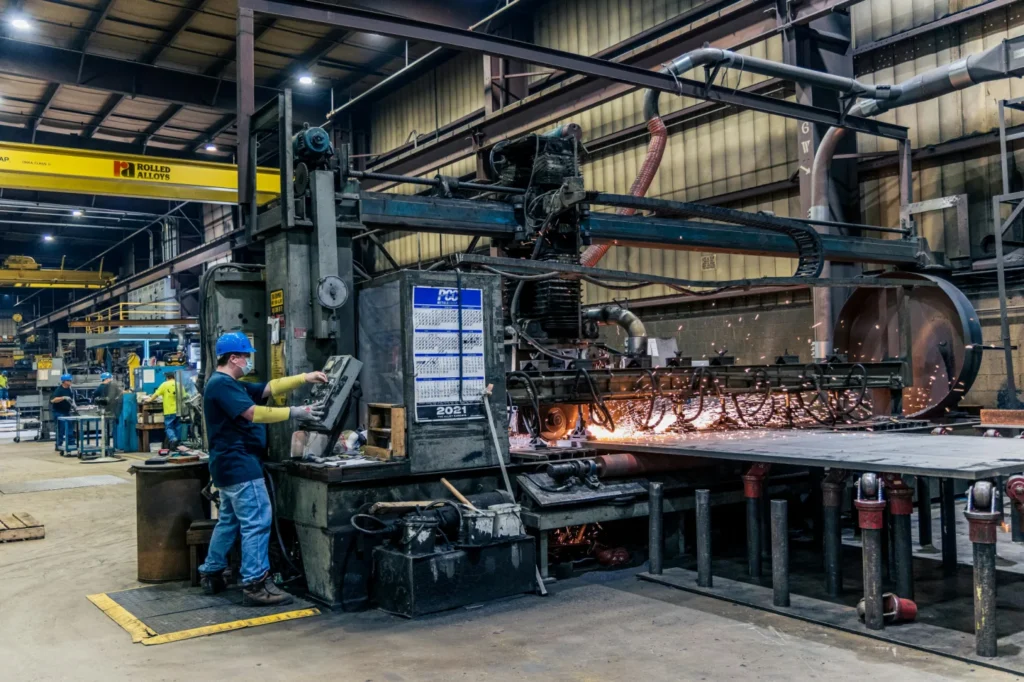
What environment will the equipment operate in? Is it a dusty factory, a damp room, outdoor conditions, or an explosion hazard zone (ATEX)? Environmental conditions determine the enclosure’s sealing (IP class) and durability.
For example, thermal power plants may have dusty environments, while dairy processing plants have high humidity. In such cases, it is essential to choose equipment with an IP66 or even IP68 rating and pay attention to anti-corrosion coatings.
Consultation with a Specialist
It is best to make a decision together with an engineer or technologist, or a sales consultant in this field. This is especially important when selecting the appropriate motor type (asynchronous, synchronous, servo) or considering the need for a controller or feedback.
When extremely precise speed control is required, a servo motor with an encoder may be necessary. If the equipment will operate in different modes, an engineer can help adapt a more flexible drive with an appropriate control algorithm.
Technical Details – What You Need to Know Before Buying
Frequency Inverters
The most important parameters are input/output voltage and frequency. Variable frequency drives can be single-phase or three-phase, depending on the power source.
It is also essential to evaluate power limits, starting current, and the drive’s control method (V/f, vector, servo). Some models have integrated brakes and filters, and communication often uses Modbus, Profinet, or other protocols.
For instance, if your equipment is connected to a PLC controller, it is important to choose a drive with the correct communication protocol. If energy efficiency is crucial, it is worth selecting a drive with vector control and energy recovery capabilities. Meanwhile, if the motor is frequently started/stopped, an integrated brake or braking resistor can be beneficial.
Electric Motors
For the buyer, it is important to know the frame size (according to IEC), shaft diameter, and mounting flange (B3, B5, B14). The energy efficiency level (IE2, IE3, IE4) is also evaluated.
Are brakes, encoders, or overheating sensors required? These additional features enhance system safety and control capabilities.
For example, conveyors often require brakes to prevent the system from slipping when stopped. Overheating sensors are essential when motors operate for extended periods or under heavy loads. If the system operates automatically, an encoder can be useful for precise speed feedback control.
Gearboxes
Torque, transmission ratio, and drive type are evaluated – whether it is a helical, worm, bevel, or planetary gearbox.
It is also necessary to consider the mounting position, lubrication type, and compatibility with the selected motor. Some models are offered as a complete set with the motor.
For example, a worm gearbox is suitable where quiet operation is needed, while a planetary gearbox is for heavy loads. If the equipment is installed in a hard-to-reach location, it is useful to choose a gearbox with long-term lubrication or an oil bath to reduce maintenance needs. A complete package saves installation time and ensures better compatibility between components.
Pricing: What Determines Equipment Cost
The price is determined by technical parameters: the higher the power or precision, the higher the cost.
Manufacturer’s reputation, certifications (ATEX, CE, UL), and additional features such as sensors, communication, brakes, and filters also play a role.
Important aspects also include the warranty period, service conditions, and equipment availability. For example, if a project is urgent and the equipment is stocked in Lithuania, this helps avoid additional costs for temporary modifications or rental while awaiting delivery.
Purchasing Priorities: What Matters Most When Choosing Equipment
The most important aspects are equipment longevity, maintenance requirements, and energy efficiency.
Compatibility with existing infrastructure, delivery time, and technical support availability are also crucial.
Evaluate whether the equipment is in stock or if production lead times are expected, especially if the project is urgent.
Environment and Installation Conditions
Will the equipment be used indoors or outdoors? Outdoor conditions require a higher IP protection rating.
It is important to know if it will be exposed to vibrations or if corrosion resistance is required. When mounting on moving equipment, additional fastening is necessary.
The higher the IP rating (e.g., IP65 or IP68), the greater the protection against dust, moisture, or liquids.
Payment and Services
Available payment options include advance or deferred payment, depending on the supplier’s policy.
Many suppliers offer consultations, design assistance, and installation services.
It is also important to assess whether start-up and commissioning support is offered and if spare parts are readily available during the warranty and post-warranty periods.
Delivery and Logistics Issues
It is important to know if the equipment is stocked in Lithuania – this allows for faster project execution and avoids downtime.
Is express delivery possible? Some suppliers offer express transport within 24–72 hours, which is particularly relevant in case of production disruptions.
Does the equipment arrive with factory packaging, ensuring safe transport – this is especially important for fragile or expensive equipment, such as servo drives with sensitive sensors.
Some suppliers can assemble the entire drive unit: motor, gearbox, and variable frequency drive – this simplifies order administration, especially when multiple projects are being executed simultaneously.
Conclusion / Summary
Before purchasing a variable frequency drive, motor, or gearbox, it is essential to evaluate all technical, logistical, and environmental factors.
Properly selected equipment ensures efficient, safe, and long-term operation.
We recommend consulting with specialists who will help you make the right decisions. Want to learn more? Contact the Simeksa team and receive a personalized offer.


