Variable Frequency Drive
A frequency inverter (also called a drive inverter or inverter) is a device that changes the frequency and voltage of alternating current from the electrical grid, adapting them to the requirements of the motor and process. The operating principle of a frequency inverter: the direct current frequency is changed using electronic components until it becomes alternating current again with the required frequency and voltage. This allows the motor speed and power to be adjusted according to your needs.
Frequency Inverter Operation Process
To understand how a frequency inverter works, try to imagine an electric current as a newly lit flame. It strives to maintain its intensity, fueled by a few damp sticks, but eventually gives up and extinguishes. HOWEVER! Try to fuel the flame on a dry oak log. The small flame will soon turn into a bonfire that warms you all evening with a steadily burning fire. A frequency inverter is like that oak log, which allows the electric current to operate stably, regardless of external factors.
The frequency inverter operating process consists of several steps:
- The device receives a standard electrical current supply from the main power grid. This input current is direct or sequential, and the frequency is constant.
- The input current signal is regulated by filtering to remove inaccurate harmonics or other noise conditions.
- The input current signal enters the control circuit, which processes it and generates a new signal with a changed current frequency.
- The signal is directed to the source, which supplies the required current frequency.
In other words, frequency inverters enable efficient control of alternating current parameters, ensuring optimal operation of equipment motors. Proper current regulation using a frequency inverter not only increases equipment motor performance but also reduces the likelihood of failures, promotes electrical energy savings, and reduces CO2 emissions into the environment.
Voltage and Frequency Conversion
It is no exaggeration to say that using advanced technologies, frequency inverters become true superheroes! They can convert electrical energy with minimal energy losses while ensuring equipment motor stability and reducing wasted electrical energy. The question arises: why is this important? In pursuit of the highest efficiency standards in the automation industry, every percentage of energy consumption is monitored. Also, in complex automated systems, frequency inverters become a critical component because they allow precise and rapid response to any performance or voltage changes. With effective voltage and frequency conversion, it is possible to ensure that motors operate under optimal conditions—this means lower operating costs, longer equipment operating cycles, and reduced environmental impact due to decreased energy consumption.
Lower Electricity Consumption
Frequency inverters, by optimizing motor power, effectively reduce energy consumption. This is a crucial factor in achieving an economically efficient production process. Operating equipment motors only when necessary reduces electricity consumption. Additionally, using frequency inverters can prevent motor overload and excessive energy consumption. This allows for more efficient utilization of available electricity resources and reduced costs.
Smooth motor speed regulation using a frequency inverter helps avoid sudden load surges. Additionally, advanced motor control systems with frequency inverters allow adaptation to changing production volumes—providing the ability to precisely regulate energy demand, reducing electrical energy consumption during production and thus lowering operating costs.
Do not be afraid to invest in frequency inverters! Reduced electricity bills will help save a significant amount of money over time, and efficient use of available electrical energy resources will foster a responsible approach to environmental protection.

Longer Equipment Service Life
Frequency inverters could certainly be called the MVPs of the industrial sector! They allow equipment motors to operate in optimal modes, reducing mechanical stress or wear. Smooth and gentle motor starting and stopping, using frequency inverters, reduces dynamic loads that are harmful to mechanical components. It also reduces vibration and noise, ensuring a quieter and safer working environment.
By ensuring maximum operation of equipment motors, considering their technical capabilities, the service life of both the motors themselves and connected drives and reducers is extended. Additionally, frequency inverters allow for the recording and analysis of equipment motor parameters, promoting proactive maintenance and fault prevention. In other words, this device is the Sherlock Holmes of the industrial sector, detecting any potential problems before they arise! All this provides the opportunity to avoid sudden motor shutdowns, reduces the need for frequent maintenance, or investment in new parts.
Years of experience show that a frequency inverters is an essential element for maximizing equipment potential. It not only optimizes equipment operation but also protects against unnecessary wear.
Versatility and Flexibility
Frequency inverters are versatile devices, applicable in both light and heavy industries. Their functionality allows for controlling motor start and stop speeds, enabling changes in operating parameters without mechanical design modifications, ensuring optimal interaction between equipment and process. Frequency inverters help achieve efficient energy consumption and optimal operating results.

Improved Management of Work Processes
Integrating a frequency inverter into automation systems improves the quality and precision of production processes:
- Process sequence optimization – facilitates coordination of sequential and complex work cycles.
- Dynamic speed change – adapts equipment operating speed to production needs.
- Detailed parameter regulation – provides opportunities for precise adjustment of working conditions.
- Real-time error diagnostics – helps quickly identify and eliminate incorrect processes.
Ensured control of these processes reduces the risk of production anomalies and ensures higher product quality.
Wide Application in Industry
We can confidently call frequency inverters heroes who make the industrial world go round! These are extremely important devices used in various industrial sectors:
- Motor starting and stopping – gentle motor starting reduces mechanical wear of equipment.
- Energy saving – adaptive control of motor operating frequency helps reduce electricity consumption.
- Process regulation – the ability to precisely set and regulate motor speed ensures precise control of the production process.
- Noise reduction – operating motors at optimal speed helps reduce noise in the working environment.
- Protection functions – equipment with frequency inverters is protected against overloads, which contributes to fewer failures.
Optimal operation of industrial equipment with frequency inverters guarantees longer service life and sustainability.
We have no doubt that this information about frequency inverters not only answered your questions but also considerably confused your thoughts. Do not be afraid! We are here to help you—we will answer all your questions, provide advice, and help you select a quality frequency inverter at an affordable price. Contact us!
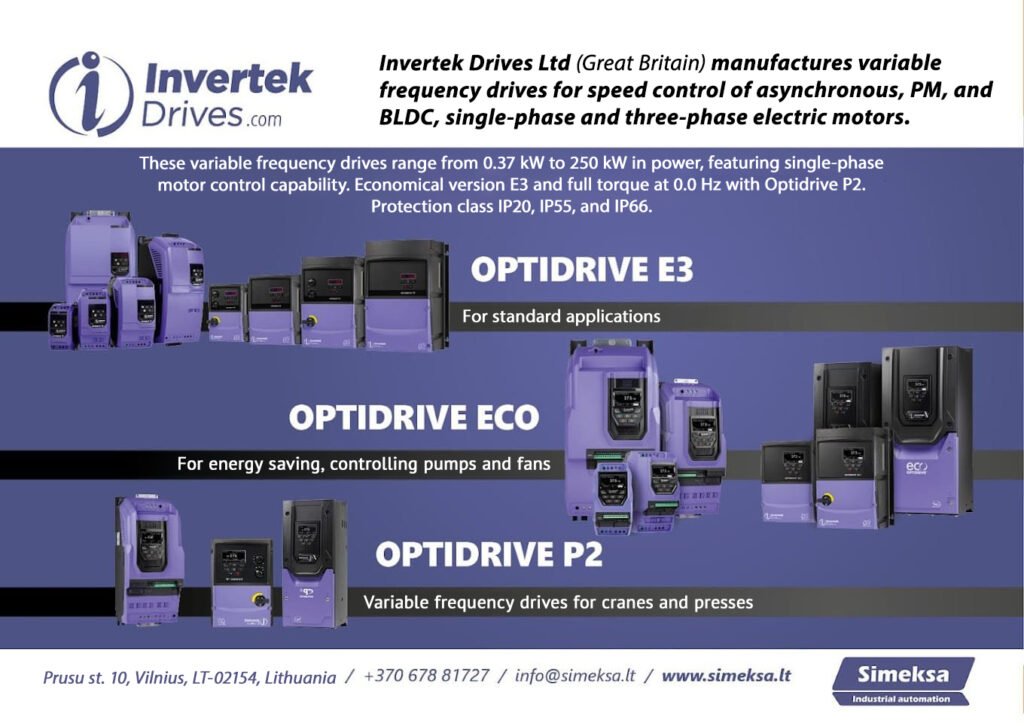
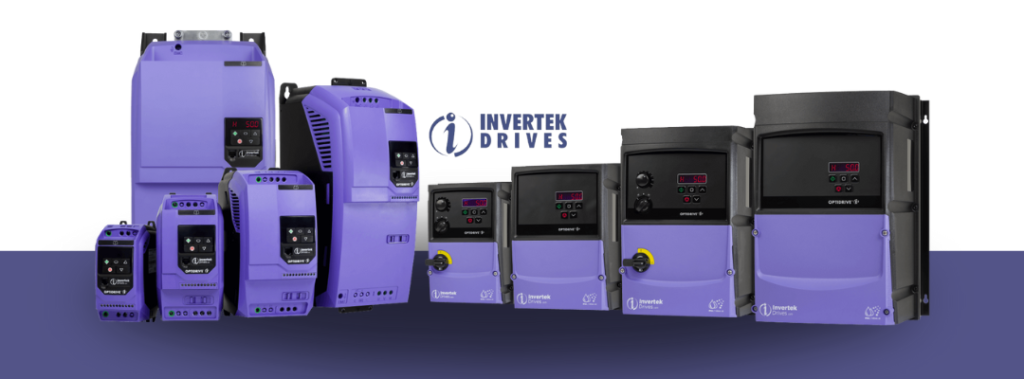
Simkesa is the official Invertek drives (optidrive) partner for the Baltic states.